

A new book, Pest, Tyfus og Hedenskab (Plague, Typhoid and Paganism), will be published in Danish on February 17, 2026.
With the mission of "converting the Chinese to Christianity," Laurits K. Larsen and his wife, Olia, served as medical missionaries in Manchuria from 1909 to 1924, a period when epidemics and political unrest deeply affected northeastern China.
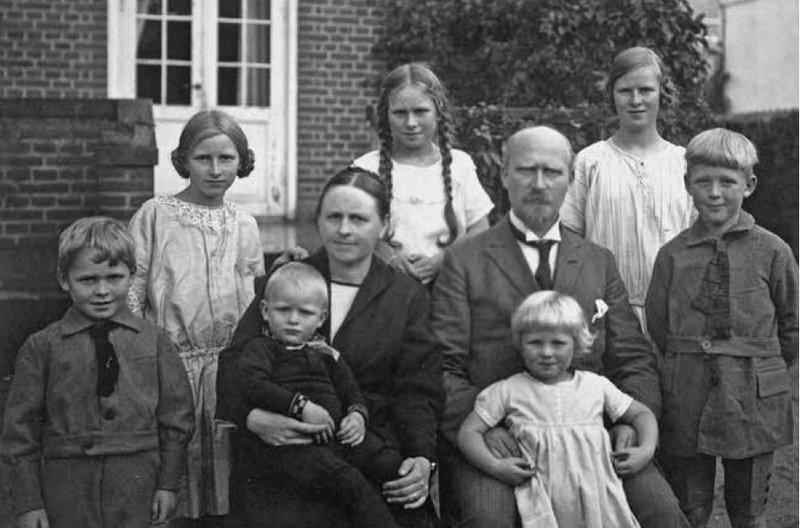
According to the book, Laurits grew up in Copenhagen's impoverished Nørrebro district at the end of the nineteenth century. His strongly religious foster mother supported his education on the condition that he would become a missionary. Laurits and Olia later spent 15 years in China, confronting disease, death, and hardship. They had eight children, though their first died at just one year old. The couple lived most of their years in Antung (today's Dandong), a remote border city between China and Korea.
As a trained doctor, Laurits treated large numbers of patients in a region frequently struck by epidemics such as plague, cholera, and typhus. He believed that healing the body could open the way to sharing the Christian faith. While their mission explicitly aimed at evangelism, medical service became their primary bridge to the local community, as many people first came for treatment before encountering Christian teaching.
However, their work unfolded under extremely difficult conditions—limited resources, overwhelming medical needs, cultural barriers, and political instability. Despite years of sacrifice and tireless service, the number of lasting conversions remained small, reflecting both the depth of their commitment and the formidable challenges faced by early twentieth-century Protestant missions in China.
The book is authored by Prami Larsen, grandson of Laurits K. Larsen. Prami Larsen is a Danish film director and consultant, and serves as director of Filmværkstedet (Film Workshop Copenhagen) at the Danish Film Institute.
Explaining his motivation for writing, he said, "Laurits' story has always piqued my curiosity. What made him leave his homeland and travel thousands of kilometers to live so far from home for years? I needed to investigate that—also to understand how I might resemble him."