

The World Chinese Christianity Alliance (WCA) and the World Evangelical Alliance (WEA) jointly hosted a global online gathering on September 23, bringing together evangelical leaders, missiologists, and believers worldwide to commemorate two historic milestones: the 180th anniversary of the WEA and the coming 220th anniversary of Protestant missions in China in 2027, dated from Robert Morrison's arrival in 1807.
Under the theme "From Legacy to Horizon: Learning from Pioneers, Mobilizing for 2033," the gathering reflected on the heritage of evangelical unity, the legacy of early Protestant missionaries in China, and the future of global mission partnership. The program was streamed live on YouTube through the channel of EnArche Institute, the WCA's secretariat.
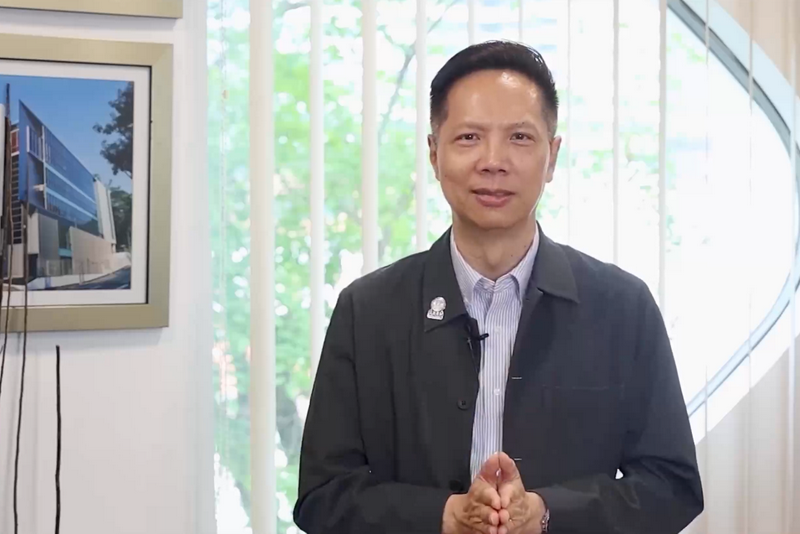
The event was guided by Rev. Ezekiel Tan, general secretary of WCA, and featured reflections from global evangelical leaders and descendants of missionary pioneers.
Remembering the foundation of global evangelical unity
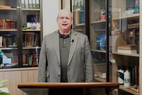
WEA Secretary General Rev. Botrus Mansour welcomed participants on behalf of the co-hosts and said the aim of the session was "to pause, remember and give thanks."
Dr. Brian Stiller, who has served as WEA global ambassador, gave the first keynote. He said church leaders from across Europe and North America formed the Evangelical Alliance in London in 1846, across denominational and national lines. Evangelicals numbered about 90 million worldwide in 1960 and an estimated 650 million in 2025, he said, roughly one in four of the world's 2.5 billion Christians, with much of the growth in Sub-Saharan Africa, Latin America, South Korea and China. "Anyone who still pictures evangelicalism as a white North American phenomenon is looking at a map that is decades out of date," he said.
Stiller also acknowledged that evangelicalism has never been a perfect movement and has at times been captive to its culture, its politics or the personalities of its prominent leaders. He said the WEA gives evangelicals a presence in international bodies that individual churches and denominations cannot have on their own. He ended by congratulating the WCA as it prepares to mark the 220th anniversary of evangelical outreach to China.
The Tri-Pioneer Legacy in China
The program then turned to three missionaries: Robert Morrison, James Hudson Taylor and Dr. L. Nelson Bell.
Dr. Andrew Loke of Hong Kong Baptist University spoke on Morrison, the first Protestant missionary to reach mainland China. Morrison's post as an East India Company translator gave him the legal right to stay, Loke said. He produced a Chinese Bible translation that, though not the first complete one, circulated more widely in China and became a basis for later versions. He also compiled a Chinese-English dictionary of about 4,500 pages.
Only 10 Chinese had been baptized by the time Morrison finished his work in 1832, Loke said, and the real measure of that work was the foundation it laid for later missionaries. When a ship owner asked whether he expected to make any impression on China, Morrison replied, "No sir, I expect God will."
Loke urged Christians to fund long-term projects that prepare the ground for evangelism, to use AI wisely to present evidence for the faith, and to support Christian professionals working where traditional missionaries struggle to gain entry.
Rev. Dr. James Hudson Taylor IV, a great-great-grandson of Hudson Taylor who has served with OMF at China Evangelical Seminary in Taiwan for six years, presented four themes from Taylor's life: passion, practice, provision and partnership. Taylor lived among Chinese people, learned local dialects, and required China Inland Mission (CIM) missionaries to wear Chinese dress, he said.
He recounted a scene in Ningbo in which a young man, after hearing Taylor speak, asked how long the gospel had been in England. Told it had been there for many hundreds of years, the man asked, "Why have you taken so long to come?"
He noted that Sept. 30 will mark 160 years since Taylor and 16 CIM missionaries arrived in China.
Bell's part was presented by his granddaughter, Dr. Anne Graham Lotz, an evangelist and author and the daughter of Billy Graham. Dr. Bell was Billy Graham's father-in-law. Lotz said Bell and his wife went to China in 1916 and set up a 300-bed hospital in Tsingkiangpu, now Huai'an. They stayed 25 years, until the Japanese invasion forced them to leave in 1941. Bell presented the gospel to every patient; she said: those who could walk attended daily chapel, and a chaplain visited those who could not.
She recalled a 1988 visit to Huai'an with her mother and sisters as guests of the Chinese government. The family's former home is now a church, and its pastor told them he knew personally more than 200,000 local people who had become followers of Jesus through Bell's ministry, she said. She closed by leading viewers in a prayer of commitment to Christ.
Her daughter, Rachel-Ruth Lotz Wright, Bell's great-granddaughter, then led a prayer for China. She thanked God for the 25 years her great-grandparents served, including the loss of a child, and prayed that believers in China would receive the blessing of Ephraim and Manasseh. She also prayed that the WEA would speak boldly about Christ.
The Horizon: Strategic Mission Toward 2033
Mansour, giving the closing keynote, said the pioneers would tell today's church to "look at what God is calling you to do in the future." That future centers on 2033, the 2,000th anniversary of Pentecost, he said. The WEA's General Assembly in Seoul last October took the theme "The Gospel for Everyone by 2033."
He named three priorities. The first is closer collaboration, with the WEA and WCA aligning networks, resources, and church-planting strategies to reach the remaining unreached people groups by 2033. The second is bringing the Chinese diaspora and the global church closer together. The third is prayer for an outpouring of the Holy Spirit like the one in Acts 2. "The Chinese church is no longer just a target mission field; it is one of the greatest sending forces for global mission today," he said.
The WCA, established on July 7, 2023, is the first WEA-affiliated alliance based on ethnicity rather than national borders. It organizes its work in six ministries: think tank, academia, resources, publishing, training and media. Its secretariat, EnArche Institute, is based in Singapore, and the alliance has regional offices in Asia, Europe, North America and Australia. The WCA says ethnic Chinese live in 198 countries and regions outside China, with a population of more than 60 million.
Rev. Gabriel Teo, executive director of EnArche Institute, invited churches and ministry partners to work with the WCA toward 2033. In the closing charge, Godfrey Yogarajah, chair of the WEA International Council, said the WEA and WCA are "called not merely to be custodians of history, but creators of history," and led a commissioning prayer. WCA Chairman Rev. Timothy Lam closed with a benediction for the church in China, the global Chinese diaspora, and the WEA.