
In a city of relentless pressure and shrinking spaces, a millennial pastor in Hong Kong is dismantling the walls of the traditional church. His sanctuary has no pews, only weights—and the congregation comes to sweat and pray.
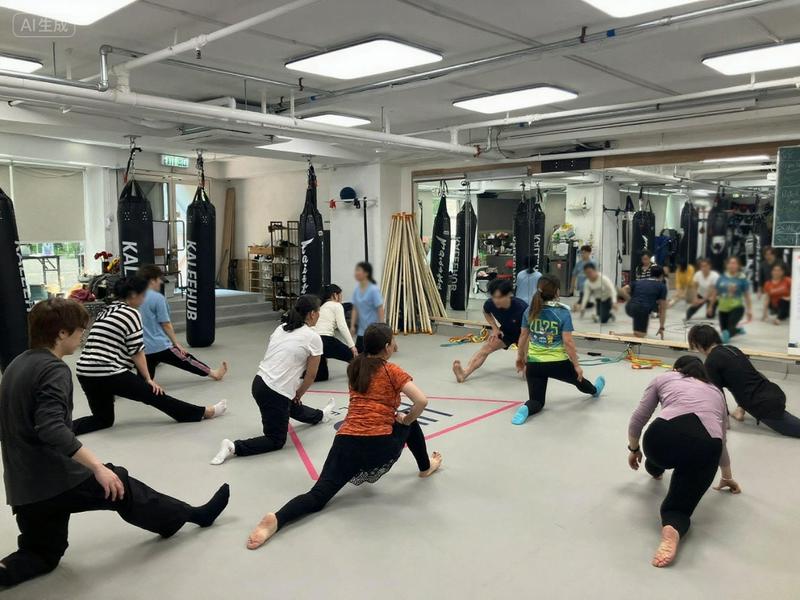
The sanctuary, tucked away in one of Hong Kong's dense urban blocks, smells faintly of rubber mats and disinfectant. There is no altar draped in velvet, no stained glass filtering the subtropical sun, and certainly no pipe organ. The silence usually reserved for prayer is replaced here by the rhythmic thud of heavy bags and the metallic clank of barbells returning to their racks.
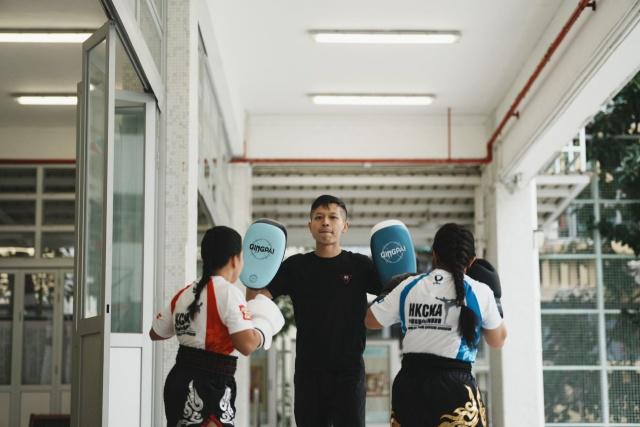
Pastor Ni, a man in his thirties who looks more like a personal trainer than a pastor—because he is both—braces himself, holding Thai pads as a young man throws a final kick. "Push through," Ni urges quietly. The young man grunts, sweat flying, and slams his shin against the leather.
Here, in this hybrid space that defies categorization, the physical and the spiritual are treated as one. Ni is attempting an experiment that traditionalists might call radical, perhaps even profane: moving the church into a gym.
"Is God only found in a worship hall?" Ni asks. "Why can't He be found on the running track?"
In Hong Kong, a city defined by its frenetic pace, astronomical rents, and a growing disillusionment among its youth, Ni's experiment is answering a question many pastors are afraid to ask: If the young won't come to the church, must the church dissolve its walls to go to them?
The crisis facing Hong Kong's churches is not unique, but it is acute. "Young people don't want to enter the church," has become a refrain among the city's clergy. To a generation raised on digital authenticity, the rigid liturgies and hierarchical structures of traditional Christianity often feel like relics of a bygone era—disconnected from the grinding reality of modern life.
Ni, born in 1990, grew up immersed in that world. As a child, he was the dutiful boy inviting friends to Sunday school, often feeling the sting of awkwardness when the cultural gap became too wide to bridge. After university, he spent a decade working within the system, serving as a full-time staffer in a traditional congregation and later at the YMCA.
"Traditional churches work hard," Ni reflects. "But their forms are fixed. Changing the direction of a ship that large is incredibly difficult."
His pivot to fitness was born not of theology, but of heartbreak. Years ago, reeling from a painful breakup, he walked into a Muay Thai gym. In the brutal elegance of kickboxing, he found a release that words had failed to provide. He noticed he wasn't alone; professionals would walk in carrying the visible tension of Hong Kong's corporate pressure cookers, their shoulders hunched and jaws set. An hour later, covered in sweat, they would leave with lighter steps and softer faces.
It sparked a realization: The church promises rest for the weary, yet the gym was actually delivering it. "I saw that exercise allows people to let down their guard," Ni says. "I began to wonder: Could this be the new entry point for the Gospel?"
Turning a vision into a brick-and-mortar reality, however, required navigating a minefield of skepticism. When Ni first sought funding for his "Gym Church," he secured a meeting with the chairperson of a prominent Christian foundation. He expected a dialogue; he received a lecture.
For three hours, the chairperson dismantled the idea. The project was too secular, he argued. A worship hall must be set apart, holy, and distinct from the world. "Why not just preach the Bible?" Others also asked. "Why do all this?"
Ni left the meeting empty-handed but undeterred. He took out loans and opened his doors in late 2021. The timing could not have been worse.
Within months, Hong Kong was engulfed by its most severe wave of COVID-19. The new studio stood empty, a silent monument to bad timing. Rent was due, debt was mounting, and the vibrant community Ni had envisioned was legally barred from gathering. "I asked myself if I had made a terrible mistake," Ni admits. "The pressure was suffocating."
With commercial operations halted, Ni converted the gym into a socially distanced study room. In a city where "home" for many young people means a cramped apartment shared with multiple generations, a quiet desk is a luxury.
Simultaneously, Ni took a job as a fitness coach in the government's quarantine centers. There, amidst the fear and isolation of the pandemic, he saw the profound loneliness of his city. "I saw a society that was starving for love," he says. The experience hardened his resolve. The gym wasn't just a business idea; it was a necessity.
Today, the space operates on a model that blurs the lines between the sacred and the commercial. Administratively, it is Ni's private company; spiritually, it is a church. The staff includes ten coaches, six of whom are ordained pastors or theological students. They are "tentmakers" in the biblical sense—earning their keep through trade while ministering to the soul.
The gym's most radical act, however, is not its workout routines, but who it chooses to serve.
On Sundays in Hong Kong, the city's pedestrian bridges and public parks undergo a transformation. Thousands of domestic workers, primarily women from the Philippines and Indonesia, gather on cardboard mats. Their labor is essential to the functioning of many Hong Kong households, yet they often live on the margins. On their one statutory day off, they have nowhere to go.
"If they stay at their employers' homes, they inevitably end up working," Ni explains. "They clean, they cook, they watch the kids. They never truly rest."
Ni's gym opens its doors to them, as well as to refugees, orphans, and those living in "subdivided units"—the notorious, coffin-sized apartments that house the city's poorest. In a city obsessed with status and wealth, offering a premium fitness space to the marginalized for free is a subversive act.
For the young people who pay to train here, the "pastoral care" is almost invisible. There is no "top-down" authority, no forced catechism. Ni understands that for a generation skeptical of power structures, trust must be earned, not demanded.
Evangelism happens in the cool-down. It happens when a student, unravelling his sweat-soaked hand wraps, sits on the mat and mentions a struggle at work or a fight with a partner.
"We don't preach at them," Ni says. "But maybe, during a discussion, we talk about the concept of 'happiness.' We might reference the Beatitudes—not as a lecture, but as a perspective. We might say, 'The world says money is happiness, but Jesus said the poor in spirit are blessed. What do you think that means?"
This "bottom-up" approach has created a community that lingers. On Saturday nights, the gym doesn't clear out after the last class. Young people stay until the early hours of the morning, ordering food, talking, and simply being together.
"Some ask if we have a fixed pastoral system, like a curriculum where you move from Stage One to Stage Two. I tell them no," Ni says. "Human life isn't linear. Even a long-time believer might feel like a beginner sometimes. Faith has highs and lows."
Instead of a rigid syllabus, the church adopts a responsive approach. Whether the issue is a career crisis, parenting struggles, or marriage, the pastors are there to walk through it in real time. The gym has even transformed into a wedding venue twice, celebrating marriages on the same floor where couples train.
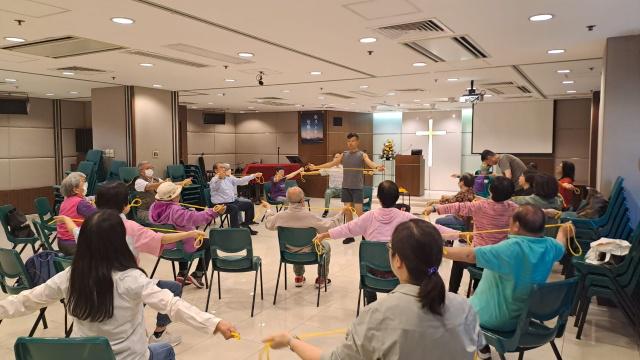
On Sundays, a congregation of 20 to 30 people gathers, though the digital door remains open via livestream for those who can't make it. The worship style is as flexible as the space itself: one week might feature traditional hymns, the next week modern English songs. Guest speakers from seminaries occasionally share the pulpit.
"People ask me how I plan to 'keep' these young people," he says. "But I've never thought about keeping them. The concept of 'retention' implies ownership. They don't belong to me."
He explicitly rejects the silo mentality of traditional congregations, aiming instead for a "Church without Walls." Citing the Apostle Paul, who collected offerings from Gentile churches to help Jerusalem, Ni views the body of Christ as one interconnected family rather than competing franchises.
"If they grow here and leave to serve elsewhere, that is the Great Commission," he says.
Originally published by the Christian Times
- Edited by Elena Li