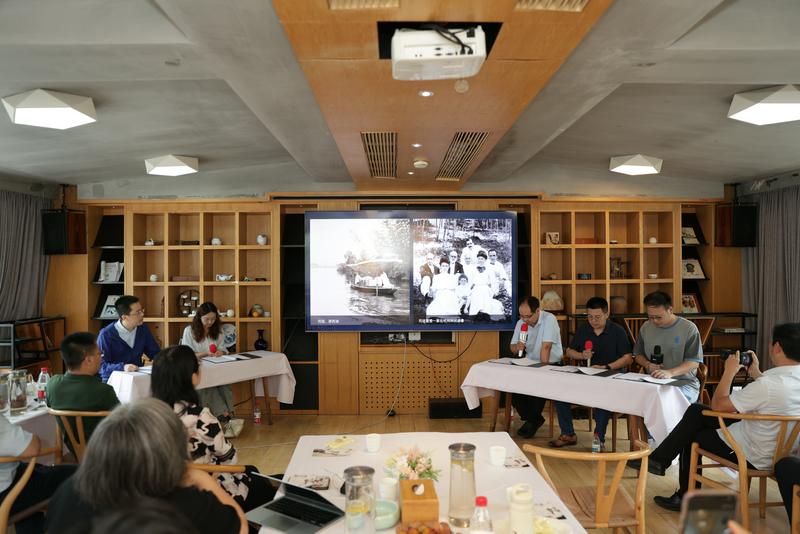

As archival photographs of Hangzhou, Yenching University, and early 20th-century China appeared on a large screen, voices from the stage read from the memoirs, letters, diaries, and speeches of John Leighton Stuart.
Among the details that brought the historical figure closer to the audience was a simple one: Stuart, an American missionary's son born in Hangzhou, spent his early childhood among Chinese neighbors, and the first language he spoke was the local Hangzhou dialect.
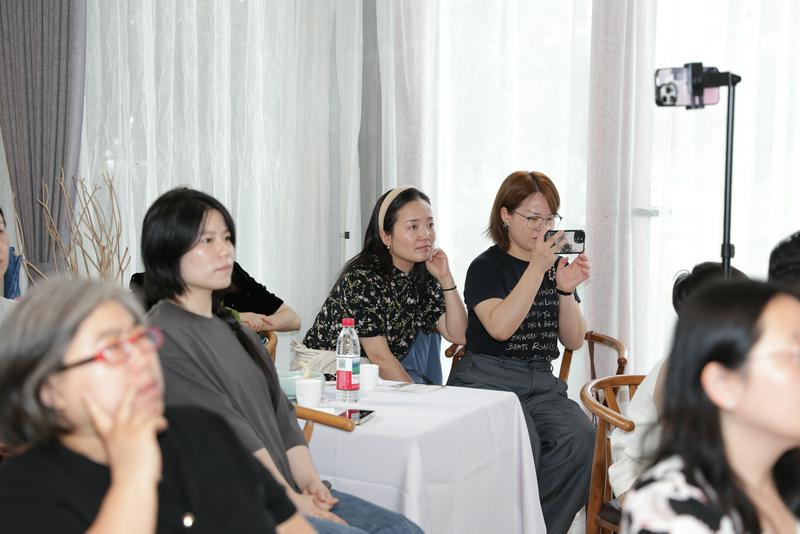
The historical reading formed the centerpiece of a gathering held in Hangzhou on June 24, 2026, marking the 150th anniversary of Stuart's birth. Scholars, pastors, Christian believers, cultural workers, journalists, and young adults attended the event in the city where the missionary, educator, and diplomat was born.
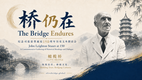
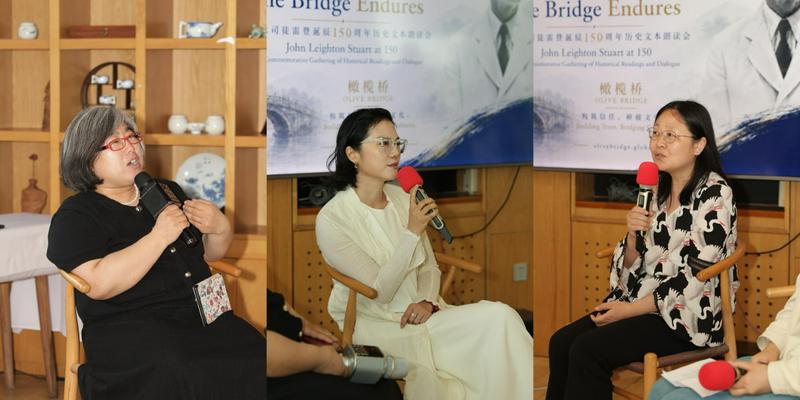
Organized by Olive Bridge, a cross-cultural research and dialogue platform, the event was titled "The Bridge Endures—John Leighton Stuart at 150: A Commemorative Gathering of Historical Readings and Dialogue." It served as the central event in a series of commemorative activities held in Hangzhou from April through June.
Organizers said the gathering was intended not simply to praise a historical figure but to revisit Stuart's complex life and consider a larger question: What does it take to build a bridge between different cultures?
Born in Hangzhou on June 24, 1876, to American Presbyterian missionary parents, Stuart spent his early childhood in China before receiving his education in the United States.
He returned to China as a missionary. He later helped establish Yenching University and became its first president. Under his leadership, the university grew into one of the most influential Christian universities in modern China and developed academic connections with institutions around the world.
Stuart was appointed U.S. ambassador to China in 1946 and served during a period of civil war and profound political change.
For many years, Stuart's name in China was often remembered in connection with the complex historical period in which he served, and his later diplomatic role sometimes overshadowed his earlier decades as a missionary and educator.
Yet his memory never disappeared entirely. Former Yenching students remembered a university president who cared personally for his students and sought to build an institution rooted in China while remaining open to the wider world. Christians remembered the faith that shaped his vocation in education and service. Hangzhou remembered a son of the city whose relationship with China began in childhood and continued throughout most of his life.
Stuart died in the United States in 1962. In accordance with his wish to be buried in China, his remains were reinterred in Hangzhou in 2008.
A Life Retold Through Many Voices
Rather than presenting a conventional lecture, the June 24 gathering centered on an hour-long, multi-voice historical reading.
The program drew from Stuart's memoirs, diaries, letters, and speeches, as well as writings and recollections by Chinese educators, intellectuals, diplomats, and members of the Yenching community, including Liu Tingfang, Hu Shi, Bing Xin, Wen Yiduo, Huang Hua, and Fei Xiaotong, to trace the arc of his life in a narrative form.
As the texts were read, historical photographs of Hangzhou, Beijing, Nanjing, and the United States appeared on a large screen. Images of city streets, ordinary residents, West Lake, Stuart's childhood surroundings, the Yenching campus, faculty members, and students were accompanied by music.
In the readings, Stuart appeared as a Christian, educator, cultural intermediary, and historical actor whose work was significant but also constrained by the political circumstances of his time. The program invited participants to encounter different dimensions of his life before considering how he should be remembered.
Some participants later told organizers that they had been moved to tears. They cited the human details preserved in the historical materials: the Hangzhou dialect of his childhood, a brief note written by a university president, assistance offered to a student leaving campus, and a final wish fulfilled only decades after his death.
What Does It Mean to Become a Bridge?
Following the readings, three speakers joined a roundtable discussion: Tu Yichao of the Center for American Studies at Fudan University; television host, author, and Hangzhou pastor Dongfang Yue; and Ruth Wang, editor-in-chief of Evangelical Vision.
Tu placed Stuart within the histories of China–U.S. engagement and modern Chinese education. She argued that his ability to move between cultures was not simply an inborn talent. It developed through years of learning, observing, and trying to understand people whose experiences differed from his own.
She also described Yenching University as more than an educational institution. By connecting Chinese studies and modern education with an international academic network, the university became an important intermediary in the development of Chinese higher education.
Turning to the present, Tu warned that faster access to information does not necessarily produce deeper understanding. Algorithms, simplified narratives, and labels can confine people to information that confirms what they already believe. Cross-cultural understanding, she said, still requires sustained contact, patience, and the experience of working together.
Dongfang Yue emphasized the role of personal choice. Stuart did not choose to be born in Hangzhou, she noted, but he did choose to return to China as an adult and devote several decades of his life to the country.
She also stressed the importance of language. Learning another language involves more than acquiring vocabulary and grammar; it provides a way into another community's habits of thought and emotional world. Stuart's early experience of speaking the Hangzhou dialect, followed by his later study of Chinese, gave his relationship with China a foundation in ordinary life.
Ruth focused on the costs of serving as an intermediary between different communities. A person who tries to understand more than one side, she observed, may not be fully accepted by either.
She also cautioned against judging historical figures too easily with the benefit of hindsight. People living through political upheaval did not know what would happen next or how their decisions would later be interpreted.
Lasting cross-cultural relationships, she added, rarely begin with grand declarations. They more often begin with a meeting, a meal, a conversation, or a task undertaken together. Trust develops gradually through particular relationships; it is not produced automatically by an increase in information.
Walking, Reading, and Dialogue
The June 24 gathering grew out of a wider series of activities organized by Olive Bridge in Hangzhou.
Beginning around Qingming, or Tomb-Sweeping Day, participants visited Stuart's former residence, Tianshui Church, and other places associated with his childhood. They also went to his resting place at Anxian Yuan Cemetery in Banshan, Hangzhou.
Other activities included a reading group devoted to Stuart's memoir Fifty Years in China, historical walks, and small discussions about education, faith, cultural understanding, and people-to-people relations.
Participants included pastors from different church communities, scholars studying Christianity and the United States, Christian artists and musicians, media professionals, cultural workers, and members of a younger generation.
During the commemorative gathering, a young participant asked what role people-to-people relations could still play between China and the United States.
Tu responded that although many forms of exchange had encountered difficulties following the pandemic, long-standing local partnerships, educational connections, and historical relationships continued to support renewed contact. Such ties may be less visible than official diplomacy, she said, but their continuity gives them enduring value.
Remembering Without Simplifying
At the conclusion of the June 24 gathering, Olive Bridge screened an AI-assisted rendition of the Yenching University school song. Historical photographs accompanied the music, bringing the university's ideals of truth, freedom, service, understanding, and friendship into the present.
Yenching University no longer exists as an independent institution, and Stuart himself never returned to its campus after leaving China. Yet the relationships formed through the university, the memories preserved by its faculty and students, and the questions raised by Stuart's life have not entirely disappeared.
One hundred and fifty years after Stuart's birth, Chinese Christians and other participants are still reading his words, reconsidering his choices, and remembering his contributions.
The bridge endures because the work of understanding one another has not ended.
Olive Bridge is a cross-cultural research, media, and dialogue platform dedicated to fostering understanding across societies, cultures, and belief systems. Through research, contextual translation, and small-scale dialogue, it helps diverse audiences move beyond simplified labels, engage complex issues with nuance and respect, and build lasting relationships of trust.