
"Today, on my birthday, I performed eight operations."
More than a century ago, a Danish medical missionary reduced an exhausting day in Manchuria to a single sentence.
With the mission of "converting the Chinese to Christianity," Laurits K. Larsen and his wife, Olia, worked in Manchuria from 1909 to 1924, when epidemics and political unrest marked the northeast region of China.
As a trained doctor, Laurits treated large numbers of patients in Antung (today's Dandong), on the Yalu River opposite Korea. The region was struck by epidemics such as plague, cholera, and typhoid fever.
Like many medical missionaries of his generation, Laurits believed that healing the body would open the way to sharing the Christian faith with the Chinese.
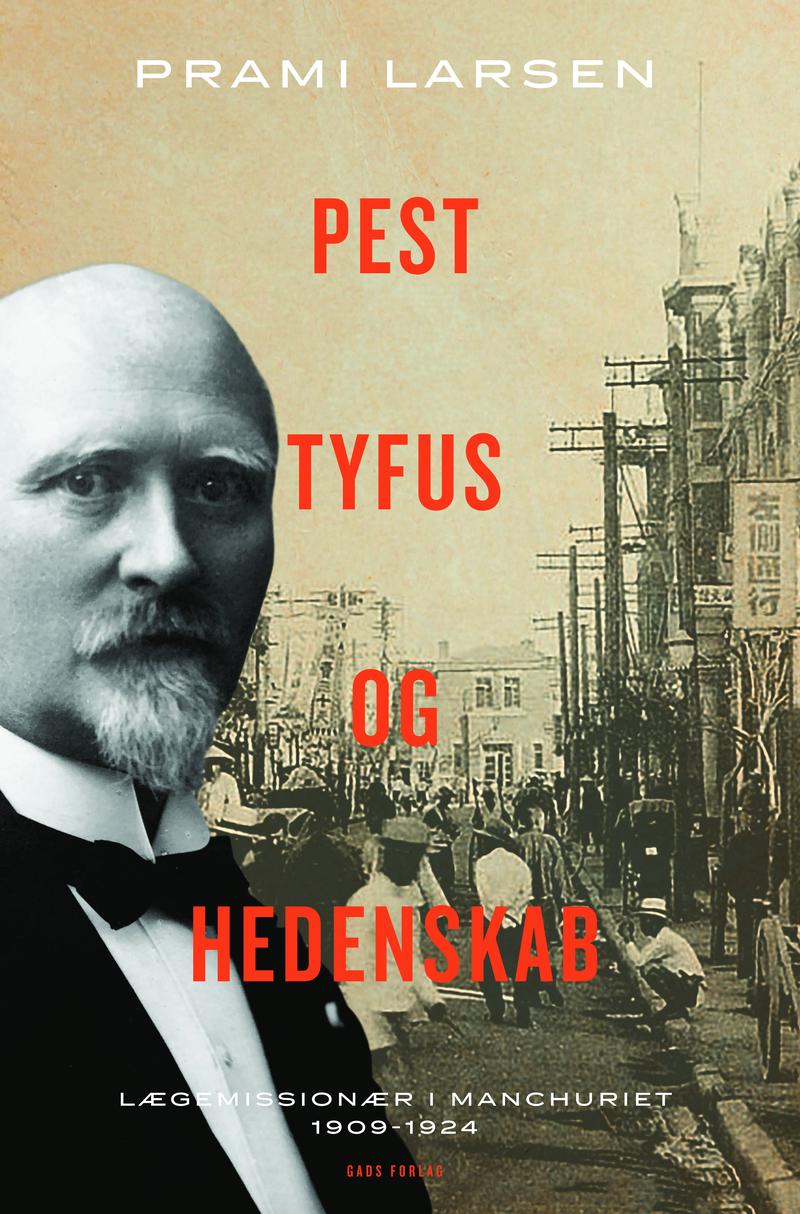
The story is recounted in a book, Pest, Tyfus og Hedenskab (Plague, Typhoid, and Paganism), published in Danish on February 17, 2026.
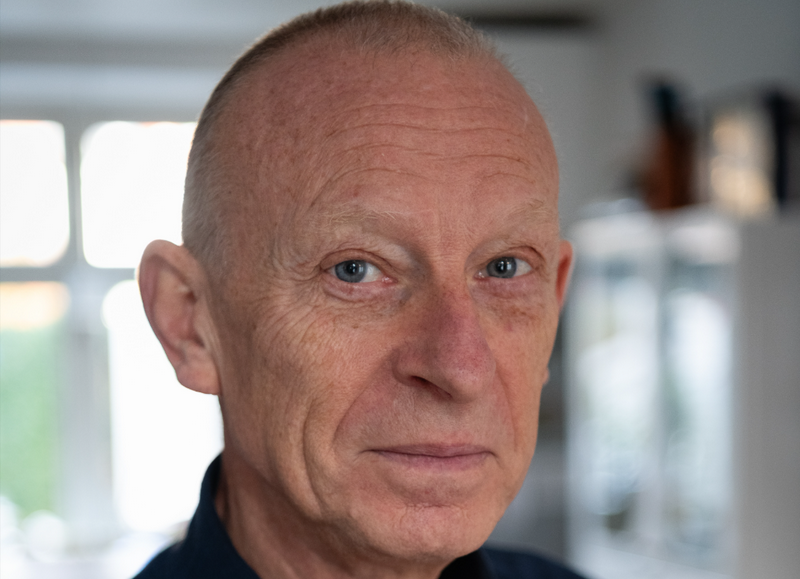
The book was authored by the Larsens' grandson, Prami Larsen, a Danish film director and consultant. It draws on Laurits' diaries from 1911 to 1924, as well as letters, missionary reports, family recollections, photographs, and other archival materials.
The birthday entry is one example of the gap Prami sought to fill. "We can imagine how that day might have unfolded," he said in an exclusive interview with China Christian Daily. "He probably ate breakfast very early, went to the outpatient clinic, and supervised the nurses. He was then called to the hospital and discovered that eight patients required surgery. He had to plan and perform those operations, perhaps eat a small lunch, and then return to the hospital. Later that night, the family might have celebrated his birthday with bread, butter, jam, and chocolate."
According to the book, on April 8, 1924, Laurits performed eight operations, both major and minor, and made a house call on Mr. Shaw, the English customs chief. That evening, the local Danish missionaries gathered to celebrate his birthday over hot chocolate and æbleskiver, a traditional Danish pastry.
A Family History Bound to China
Prami's interest in this history began long before he opened his grandfather's diaries.
His father, Knud Asger Larsen, was born in Antung in 1919. When Prami mentioned this as a child, other children sometimes teased him because he did not look Chinese.
"The story of China has therefore been part of my family history throughout my life," he said.
What began as a childhood curiosity later developed into a larger question: What had led his grandfather to leave Denmark, travel thousands of kilometers, and spend the best years of his adult life in a then distant and dangerous country?
From Film to Writing
Prami first read his grandfather's diaries in the Danish state archives in the 1990s. By then, he had begun working as a freelance filmmaker and did not have time to turn the material into a book.
In 2023, after spending 28 years as the director of the Filmværkstedet (Film Workshop Copenhagen) at the Danish Film Institute in Copenhagen, Prami retired and returned to the archives.
Apart from diaries, his grandfather had also written numerous letters and reports for Dansk Missionsblad, the Danish missionary magazine. Together with family photographs, mission records, and other archival sources, Prami sought to reconstruct both his grandparents' lives and the historical world around them.
His experience as a filmmaker shaped his approach.
Rather than simply listing events, he tried to imagine how people moved through rooms, what they wore and ate, how a hospital functioned, and how fear, grief, exhaustion, or hope might have shaped a particular day.
At the same time, the larger historical and political setting could not be treated merely as background.
In 1881, Laurits K. Larsen was born into a poor family in the Nørrebro district. As the Industrial Revolution started in Britain and then moved to Europe and Asia, people, especially poor workers, became Christians to find comfort amid the suffering.
"Laurits was brought up in a Christian environment without any alcohol abuse or any violence, and was later placed in foster care with a teacher who recognized that he was an intelligent boy and gave him an education based on Christian principles."
As he grew up, the China Inland Mission had been founded by James Hudson Taylor for decades, urging the Europeans to bring the gospel into China. After receiving his medical qualification, Laurits embarked on his mission to China.
Since Danish missionaries had established a number of mission stations in Manchuria, beginning around Port Arthur in northeast China, and gradually moving north. Laurits "played a major role in this movement as the manager of a Christian missionary hospital in Antung."
Difficulties in Medical Care in Manchuria
Believing the Chinese were open to Christianity, Laurits worked hard at the hospital under extremely difficult conditions—limited resources, overwhelming medical needs, cultural barriers, and political instability.
When Laurits arrived in 1909, the Qing dynasty was nearing collapse. As the last Chinese emperor, Puyi, abdicated in 1912, China was in a state of political disorder, and warlords had taken control of many provinces. "It was particularly dangerous to live and work in Manchuria," said Prami.
Prami referred to three of his grandfather's major struggles: plague, typhoid, and what missionaries of Laurits' generation called "paganism"—the non-Christian beliefs and practices they hoped Christianity would replace.
According to Prami's book, Laurits played a leading role in efforts to contain the 1921 cholera epidemic. The book recounts that his work helped prevent the disease from spreading farther south and earned him the Order of the Golden Grain, an imperial decoration awarded by the Republic of China. A decade later, Laurits himself became seriously ill with typhoid fever and was unable to work for more than a month.
Prami argues that instead of being Christianized, people in Manchuria longed for social stability and the necessities after the fall of the emperor. "People need food before they can have faith," said Prami.
Meanwhile, political violence was a constant presence. Laurits' diary referred to armed groups outside the city, warlords, rebels, and the possibility that mission compounds might be attacked or burned. In only a few lines, he might note that hundreds of armed men had gathered near Antung.
Opium posed another crisis. At the hospital, Laurits treated patients whose health and families had been devastated by addiction. Prami places their suffering within the wider history of foreign intervention in China, pointing to British profits from the opium trade and, later, Japanese involvement in the circulation and exploitation of narcotics.
An Unexpected Source of Conflict
While searching the old materials, one unexpected discovery surprised Prami: the conflict within the Danish missionary community.
Due to limited funding, the Danish Mission Society prioritized conversion over other things, so Danish missionaries competed for the money. "Those who had participated in the first and second waves of missionary work had stronger positions and were better able to secure funding," said Prami.
There were also disputes over funding for the medical mission, which was costly and involved work with women, children, and schools. "My grandfather repeatedly argued that there was not enough money to operate the hospital because there were so many Chinese patients." In addition, few Danish doctors were willing to serve in China despite the enormous need for medical care.
The archival documents also revealed deeper disagreements about how Chinese people should become Christians.
The missionaries imposed strict requirements on people who wished to become "true" Christians and be baptized. "First, they had to read the Bible, even though very few Chinese women could read at that time. That requirement immediately excluded approximately half the population."
"Second, they had to acknowledge their sins. However, the Christian concept of sin was not necessarily part of the Chinese cultural framework. Many Chinese people did not understand what the missionaries meant by sin or Satan.
"Third, converts were required to give up all their other gods. Many Chinese people preferred to retain several religious possibilities rather than accept only the Christian God."
From Danish Church to Chinese Church
Laurits wrote articles in the mission magazine challenging these policies, asking why the Chinese members could not establish a "Chinese church." "He had observed that the Chinese members of his staff—including nurses and evangelists—could communicate the Christian message in ways that other Chinese people understood," said Prami.
For Prami, this question reflected a much older tension in the history of Christianity in China: the Chinese Rites Controversy. Beginning in the late Ming Dynasty, Jesuit missionaries such as Matteo Ricci sought to accommodate Chinese traditions and gained access to the imperial court through their scientific knowledge, while other missionaries took a more rigid approach. The controversy intensified under the Qing Dynasty, when Rome rejected ancestral and Confucian rites, and imperial restrictions on Christianity followed.
Prami believes that later Protestant missions, despite some efforts at cultural adaptation, still underestimated the depth of Chinese civilization.
"It was not that simple," he said. "The Chinese already knew who they were."
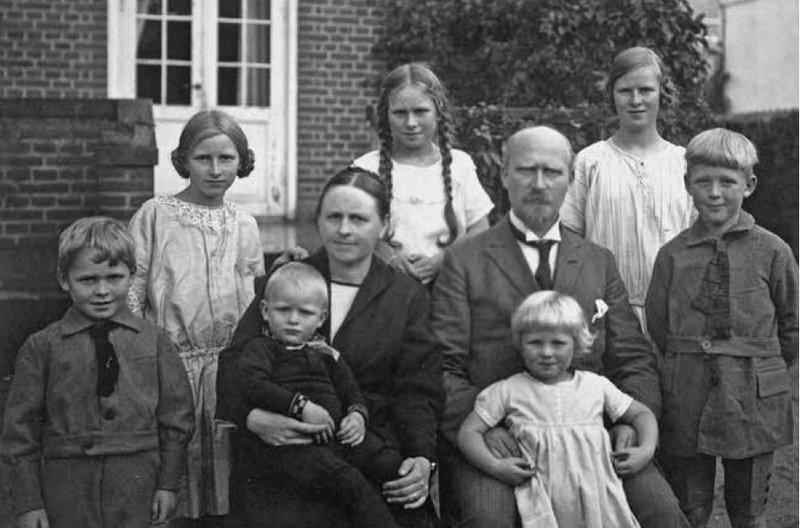
Laurits developed a great respect for the Chinese people as time went by. He concluded that the mission should be carried out by the Chinese people themselves. In 1924, amid concerns about health, finances, and the family, Laurits and Olia left China for Denmark with their seven living children.
Prami reflected that missionary history could not be separated from the colonial context, claiming that European missionaries often traveled along routes opened by political, military, and commercial expansion. In some cases, he said, mission could become a form of "mental" or "cultural" colonialism—when Europeans assumed that possession of the right religion, political system, or set of values entitled them to reshape other societies.
For Prami, this sense of cultural superiority did not end with the missionary era. He sees a similar impulse in some later Western efforts to export democracy or capitalism through political pressure or military intervention. "We think we are better because we have this Christian value system in our backbone," he said. "But I don't think we are better people."
A Grandfather's Faith, Seen by His Nonbelieving Grandson
Although he is not a Christian, Prami was deeply struck by the faith that sustained Laurits through years of danger, illness, and relentless work.
"There is a saying that faith can move mountains."
The diary entry about performing eight operations on Laurits' birthday became, for Prami, a symbol of that strength.
"I often wonder where that energy comes from," said Prami. "Faith can provide people with an enormous source of strength. That is what happened to my grandfather, and that is what interests me."
For Laurits, that strength was bound to a dream: reaching the people of Manchuria through medical care and Christian mission. "That dream gave him the energy to travel there, help Chinese people, and save many lives through medical work."
The calling that sustained Laurits also came at a cost. After their first child, one year old, died in Seoul, Prami imagines Laurits returning to Antung and burying himself in hospital work, while Olia remained at home with her grief, sorting through the clothes their daughter had left behind.
Returning to Denmark in 1924, however, brought a different kind of struggle. After spending nearly 15 years in China, Laurits found himself outside the professional career structure of Danish medicine.
"He could not simply return and become the head of a hospital department because he had not participated in the professional career structure followed by Danish doctors. He had to start again while supporting a very large family."
Financial pressure also shaped the lives of the children. Several were sent to Christian schools or expected to begin working at an early age. Prami's father, Knud, who was not yet five when the family left China, was later sent to a Christian boarding school away from home.
Knud developed a lifelong love of music through churches, Christian schools, and religious teachers. He sang and played both the violin and piano. That musical inheritance later passed to Prami, who began playing the ukulele at the age of nine and continues to play guitar.
Despite this, the family remained proud of Laurits. "We still possess one of the imperial decorations he received, and we are proud both of the object and of the story it represents," said Prami.
Returning the Story to China
Although China has shaped his family history and occupied years of his research, Prami has never visited the country.
He once tried to arrange a research trip to Dandong but was unable to secure the money needed for an interpreter, a guide, and an extended stay. His publisher could not afford to finance the journey.
Although Prami has traveled elsewhere in Asia, the city at the center of his book remains a place he has reconstructed through diaries, maps, archives, and imagination.
He hopes the book will eventually be translated into English—and perhaps into Chinese.
Prami believes the story can be read from several perspectives: as missionary history, family history, social history, or a study of the inner strength that enables people to devote themselves to a dream. It also explores the place of Christianity and the workers' movement in responding to the poverty, urbanization, and suffering produced by the Industrial Revolution.
"I hope the story is sufficiently dramatic and engaging that readers will continue following it while also recognizing its broader conclusions," he said.
Prami also hopes to learn more about his grandmother, Olia. While Laurits left diaries, letters, and reports, far less survives of her inner life.
"I met her when she was old and blind, and she told stories, but we do not have the same documentary record of her inner life that we have for my grandfather."
Prami said that only one direct quotation from her has been preserved: wherever Laurits wanted to go, she would follow him.
China itself continues to fascinate him. "China is an extremely interesting country, and trying to understand it is a fascinating puzzle. I am particularly interested in Chinese people and would love to meet more of them."