
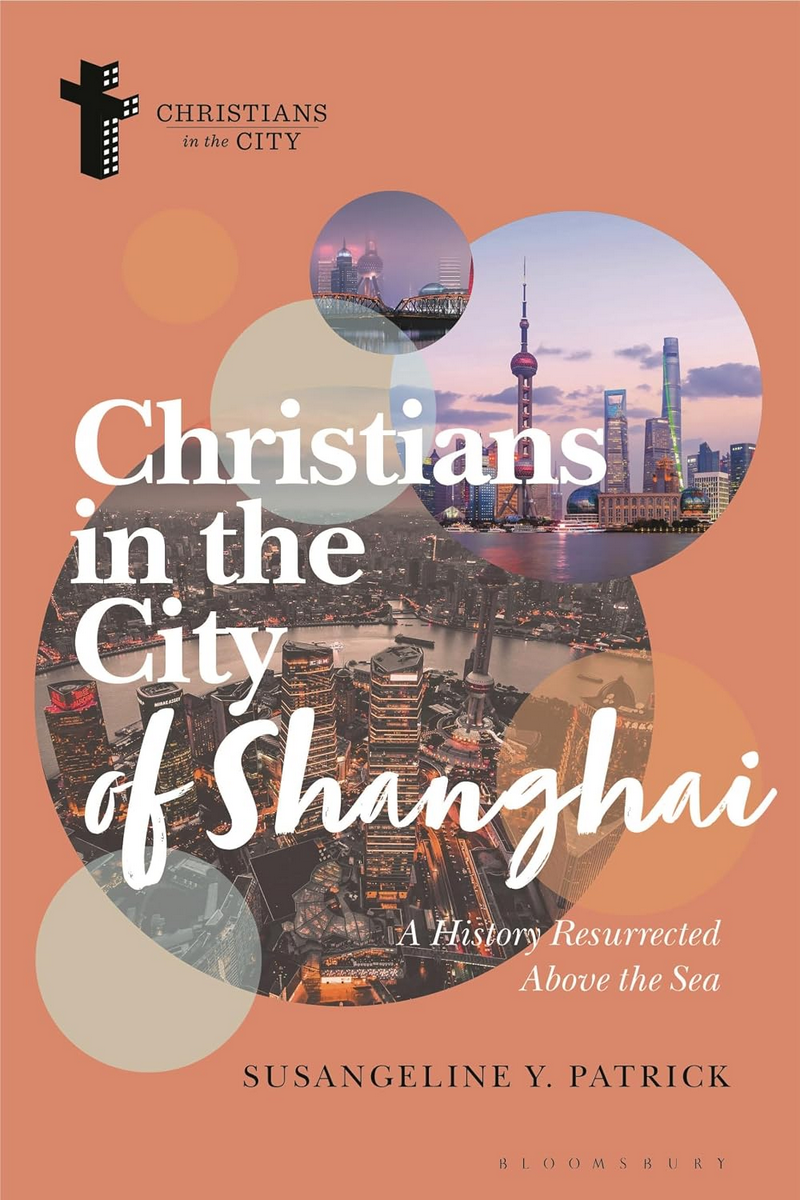

Born in China, Dr. Susangeline Patrick (潘稣赞) spent many years living in China. She is now Professor of World Christianity at Nazarene Theological Seminary in the United States, a visiting researcher at the Center for Global Christianity & Mission at Boston University, and a faculty member of NAIITS, an Indigenous learning community. With her background and connections in Shanghai, she published Christians in the City of Shanghai in 2023, exploring the diverse Christian communities and expressions of faith, as well as its more than four centuries of Christian history.
In an exclusive interview with China Christian Daily, Dr. Patrick discusses the history of Christianity in Shanghai, the role of Chinese Christians, house churches, the experience of Christians during the COVID-19 pandemic, international Christian communities, urban ministry and burnout, and her research on Christianity in Yunnan.
The interview has been edited for length and clarity.
China Christian Daily: Could you please introduce yourself and tell us about how you came to write this book?
Susangeline Patrick: I'm a Protestant Christian and a member of the Methodist church. My specialty is church history, and I've been teaching at Nazarene Theological Seminary for six years. Christians in the City of Shanghai is my first published academic book. Although my PhD dissertation focused on Jesuit studies, I was trained as an early modern historian.
Dyron B. Daughrity from Pepperdine University was developing a book series called Christians in the City, published by Bloomsbury Academic, highlighting global cities. I remember looking at the list and recognizing one of the pictures—the Catholic church in Xujiahui. I remembered seeing that magnificent church, and then looking at the list, I didn't see any cities in mainland China included. So I sent him an email and said, "How about we include Shanghai?" It's one of the world's major global cities. He asked if I would like to write the book. I thought about it, and it was kind of crazy—I spent one Saturday and typed up a twelve-page book proposal.
My first impression of Shanghai in 2007 was really a fascinating experience. I visited a Catholic church, the Holy Trinity Cathedral, a Russian Orthodox Church, and the former Jewish synagogue.
China Christian Daily: As a scholar of World Christianity, what stands out to you when you look at the history and development of Christianity in China?
Susangeline Patrick: I have graduate students ranging in age from about 22 to 70, many of whom have ministry experience, but they know less about world history. As a scholar of world Christianity, I introduce the world history of Christianity to them.
They are often surprised to learn that Christianity arrived in China as early as 635 AD. Our university has a rubbing of the Xi'an Stele, or the Stele of the Spread of Nestorian Church of Daqin in China (大秦景教碑), and I use it to introduce this story to my students.
They are also impressed by how much Chinese Christians have endured throughout the centuries amid the socialpolitical situation and other challenges in China. There have been periods of peace and Christianity thriving, but periodically, there would be persecution.
What has made Chinese Christianity unique is the theology of suffering—how we think of life and hardship. We can learn from Chinese Christians: How did they survive without priests or pastors? How did women become the backbones of the church? They simply went out and served, knocked on doors, and communicated through their households and networks of friends. I think it is an extraordinary story to tell.
China Christian Daily: Shanghai has a unique place in the history of Christianity in China. Could you give us an overview of the Christian landscape in Shanghai, especially the development of Protestant Christianity?
Susangeline Patrick: Christianity in Shanghai actually started with Catholicism. Xu Guangqi was the Minister of Rites (礼部尚书) of Ming Dynasty, and his father had been baptized in Beijing. After his father passed away, there was a funeral going on. At his father's funeral, non-Christian participants were impressed by how people grieved and mourned, and then they became converts. That was the beginning of Catholicism in Shanghai.
Protestant history in Shanghai began before the city was opened as a port city. The 19th and early 20th centuries are what we call the great Protestant missionary century. During that period, many Chinese Christian men and women also worked as Bible women, co-porters, teachers, translators, and church planters. But Protestant missions involved foreign missionaries and Chinese working together, including in education, medical, and Bible translation. Some of the missionaries had to learn not only Mandarin Chinese, but also Shanghainese.
From the 1850s to the 1950s, there was extensive collaboration between Protestant missionaries and Chinese Christians. Chinese Protestants were especially early adopters of the self-supporting principle. Some started financially independent assemblies while also developing a sense of Chinese Christianity. What does it mean to be both Christians and Chinese? It didn't mean working without collaboration, but they wanted to become independent of churches that were supported by foreign missions.
My book also moves into the history of the Orthodox Church. I think the history of the Orthodox Church is not very well known in Shanghai, but there are many more stories to tell.
Christians as a collective community experienced a great deal during the Sino-Japanese Wars and under the rule of the Nationalist Party. There were also some difficulties that I think people often don't hear about. In the 1950s, they experienced a lot of disruption because foreign missionaries were expelled. Chinese Christians went through a very harsh period. That connects to the subtitle of my book, A History Resurrected Above the Sea. Shanghai (上海) means "above the sea." I see my argument about the history of Christians in Shanghai not as a new expression, but as a history resurrected.
Christianity did not die during the 1950s, '60s, and '70 s. In fact, we saw the number of Christians, not only in Shanghai but in China as a whole, actually double. How did people survive while facing such hardship? That's the story I come back to again and again.
Christians in Shanghai also lived alongside people from other faith communities. My book talks about how they interacted with people from Jewish, Islamic, and Buddhist backgrounds. I interviewed many people, and they gave me wonderful stories and narratives of their testimonies and how they experienced these new forms of Christianity.
Toward the end of the book, I focus a lot on new expressions of Christianity and how Christians sometimes have to navigate the social and political system. Christians have found creative ways to live out their faith, including through charities, music, and books. The Internet has also shaped how people encounter Christianity.
Many Shanghai Christians have since moved to other places, including Spain and countries in Africa, and some have become missionaries themselves.
China Christian Daily: Shanghai has often been described as a key center of Protestant Christianity in modern China. What made Shanghai such an important hub for Protestant missions and church development in the 19th and early 20th centuries?
Susangeline Patrick: The multilingual and multicultural environment made Shanghai a vital place. People could easily go there and become familiar with the surroundings before going to other places, such as Shandong or Yunnan.
Geographical location was one factor. But by the early 20th century, Shanghai was also home to many different cultures, including German, American, British, and French communities.
China Christian Daily: Your research highlights both the influence of foreign missionaries and the contributions of Chinese Christians. How do you understand the relationship between missionary influence and Chinese Christian agency in shaping Shanghai Protestant Christianity?
Susangeline Patrick: I see a lot of collaboration and partnership, but also some conflict. There was collaboration in Bible translation, church planting, medical services, and training. But the relationship was not always balanced because of power dynamics.
Particularly in the 1910s and 1920s, some Chinese Christians saw certain Protestant missionaries as imperialistic. They wanted greater independence and began establishing their own missions, structures, and organizations.
One issue I find particularly interesting is that, even when Protestant missionaries and Chinese Christians worked together, credit was not always given to the Chinese Christians. Many Chinese home mission organizations were founded in Shanghai in the 1920s. They organized Christians from different parts of China and sent them to places such as Yunnan and other remote areas.
China Christian Daily: Beyond missionary work and church planting, Protestant Christians in Shanghai also contributed to education, medicine, publishing, and social services. How did these efforts shape Shanghai's society and the broader development of Christianity in China?
Susangeline Patrick: It reflects a holistic way of living out the Christian faith. Christianity was not simply a private relationship with God; it was also about doing good for others and for the community. Many social services, especially medical work and charitable efforts such as rescue missions, grew out of this desire to serve the community.
These efforts also built a foundation for the future. Universities trained highly educated people who later became important in educating younger generations.
China Christian Daily: The church in China consists of registered churches and house churches. You wrote about house churches in Chapter 4: "Indigenous Christians and Globalization." How do you understand the house church?
Susangeline Patrick: Having lived in China for a long time, I've heard both sides of the story. Many house church Christians, particularly in Shanghai, are strongly opposed to the official church, while some members of the official church have little understanding of how the house church developed. I think there are misunderstandings on both sides.
There may also be an understanding that Christians can live out their faith in different ways and coexist in harmony. Social harmony is such an important theme throughout Chinese history. The two sides are not always in opposition, although there are issues that may be difficult or even impossible to reconcile. In those cases, people can still disagree civilly. Increasing mutual understanding is important.
Most of the people I interviewed were house church members, so I changed their names to protect them. It is important to tell their stories while protecting their identities.
China Christian Daily: If you were introducing the house church to American Christians, how would you explain it?
Susangeline Patrick: Over the past 20 years, there have been significant church-planting movements involving house churches in the United States and the UK, although the reasons for starting them are different.
I remember being a teaching intern for one of my former professors. We went to Miami and visited many Hispanic churches, including Cuban and Haitian churches. There were large churches, but also house churches and church planters meeting in coffee shops. So I don't think the concept is entirely foreign to American Christians, especially younger generations who think differently about church structure and leadership.
In the United States, many books focus on the persecution of Chinese Christians. People may be familiar with persecution, but the misunderstanding is that just because there're restrictions and periodic persecutions, it doesn't mean people were living in fear all the time. Many Americans are surprised when I tell them there are Christian bookstores in China. On the street where I lived in Xi'an, there were two.
Urban house churches also include many educated people. I wrote about that in my book. I enjoyed the deeper conversations because people were constantly reading about Christianity, theology, and social issues. I'm still connected with many of my friends from the house church.
China Christian Daily: You also wrote about the church and the Christians in Shanghai, during COVID-19. Most books on Chinese Christianity discuss its history and perhaps the early 21st century, but they do not really update the story after the pandemic. Can you tell us more about that?
Susangeline Patrick: Maybe this is connected to my personal experience. When COVID broke out, I was in Shanghai at the end of January 2020 for a visit. I had several things I needed to do, but everything was shut down. My parents called early one morning and told me to get out and buy a ticket. My flight had been canceled, but eventually I got what I think was the last Delta ticket. I remember running to the airplane and becoming the last passenger to Seattle.
I still had friends in Shanghai, so we stayed in touch, and I knew what was happening. I was also writing this book at the time, which took about three years, so COVID became part of the story.
What struck me was the contrast between Shanghai and the United States. In Shanghai, people generally understood that this was a time of quarantine and that everyone needed to do their part. That did not mean people were not afraid. There was a great deal of uncertainty, and Shanghai felt almost like a ghost town. But I did not see the same kind of resistance to masks that I later saw in the United States, where some people resisted vaccination.
Having experienced both contexts, I came to appreciate more deeply what Christians in Shanghai did for one another. In a time of such uncertainty, many people were willing to sacrifice for others and put others first. That made me think of a Christ-like way of living. But we should also recognize the psychological impact of such an experience. I'm not a psychologist, but I think many people carried the effects of that period with them.
China Christian Daily: What about international Christian communities in Shanghai?
Susangeline Patrick: We should know that international churches in Shanghai are restricted only to foreign passport holders, although international Christians can sometimes attend non-international churches. There are quite a few international fellowships in Shanghai, and they are very diverse in language and nationality.
Some operate similarly to churches in the United States, with men's breakfasts, retreats, fellowship activities, and programs for children. Generally speaking, they are non-denominational, with a mix of theological perspectives. Some have limited understanding of local Shanghai Christian life. I've listened to many sermons there, and some are quite similar. In terms of worship style, they are not very different from what you might find in a megachurch.
China Christian Daily: Have you ever attended a Chinese church in Shanghai?
Susangeline Patrick: I attended Moore Memorial (Methodist) Church near the People's Square. It was more like a traditional service. One of the services I attended was led by a woman pastor who preached in Shanghainese.
I appreciated that the sermon adapted to the local context rather than being a replica of a generic sermon. The hymns were mostly translated into Shanghainese, and I appreciated that the service was conducted in the local language. They also had a choir.
The church was very crowded, and people were very warm and kind. I remember sitting between people I had never met, and they were aunties saying, "Oh, come and sit with us!" After the service, some Christians came to the altar to silently pray. It was quite moving.
China Christian Daily: As China's cities continue to transform, what can the history of Christianity in Shanghai contribute to conversations about the future of urban Christianity in China and around the world?
Susangeline Patrick: There are many lessons, but I think we first need to recognize that global cities share many characteristics. People are constantly on the move, encountering other cultures and languages. In some ways, being a Christian in Shanghai is not so different from being a Christian in a city such as New York.
It is difficult to say exactly what lessons other cities should take from Shanghai. We need to hear the stories and allow the stories of Shanghai Christians to shape our understanding.
I don't think either megachurches or smaller house churches are necessarily better or worse than the other. House churches can nurture relationships, while megachurches may face challenges in discipleship and building close relationships. But house churches can also be vulnerable. One interviewee told me that cults are likely to prey on house churches.
A common thread for global cities is stress. The high cost of living and demanding work environments in cities such as Nairobi, Toronto, Los Angeles, Seoul and Shanghai can make work-rest balance difficult. People work six days a week and then go to church on the seventh. Especially in Chinese house churches, serving is often volunteer work. In the long term, how can people not be burned out?
China Christian Daily: Have you perceived any solutions to that burnout, perhaps from your book, your interviews, or your own experience?
Susangeline Patrick: In big cities, people are more likely to be lonely. In my experience, people in the church are warm, which can give you a sense of kinship. Once you become part of the family, you are part of the family. I think that can provide a lot of help.
It is also important to share the work rather than relying on a single leader or just a few people. Rotate responsibilities and help younger people take on even small tasks. That is somewhat like returning to the early church. If we do that, the work does not become too much for one person.
I teach a Doctor of Ministry class on spiritual formation and discipleship, and I think about how stressed my students are. Many are doing ministry while studying full time, and they also have families and friendships. So friendship is really important. Christians need to nurture those relationships.
There are also very practical things: people need to sleep, turn off their screens, and create space for themselves. If you have a group of friends who can listen and support you, that can be very helpful. In China and Shanghai, there are also people offering Christian counseling, which can be helpful.
China Christian Daily: We've noticed that some younger, educated Christians in China seem increasingly interested in Orthodox theology, Catholic devotional practices, and other more structured forms of spirituality.
Susangeline Patrick: Many young people, including Gen Z, are attracted to a structured way of being. Sometimes they are interested in spiritual formation.
I take my students to parks, walking trails, and art museums. I have also taken them to a Benedictine monastery, where the sisters have a very structured rhythm of prayer and chanting. My Protestant students often come up with projects such as retreats designed for Christians. I have a Doctor of Ministry student who is a pastor in Singapore, and his project is to design a retreat for Christians there. The goal is to prevent burnout and help people become replenished and energized.
China Christian Daily: We noticed that you are also researching the history of Christians in Yunnan. Could you tell us about that?
Susangeline Patrick: I just submitted the first draft of my next book. It has seven chapters, and the title is Becoming Indigenous Christians: Catholic, Protestant, and Pentecostal Encounters in Yunnan. The timeframe is from the 1650s to the 1950s, with most of the book focusing on the 19th and early 20th centuries.
I'm trying to focus on missionaries, ethnic minorities, and Han Christians, highlighting the contributions of all of them. There were also Christians from Myanmar involved in Yunnan. Some were Karen, an ethnic group from Myanmar, and they served as missionaries and evangelists in Yunnan.
I discovered many interesting encounters, particularly around how people wrestled with different cultures. Many missionaries from France and elsewhere were also collectors interested in Yunnan's biodiversity. One French missionary in the 19th century even smuggled a Yunnan monkey to the National Museum of Natural History in Paris. Some missionaries translated texts and learned local languages. Some adapted to local food and customs, while others made fewer cultural adaptations.
There were also complicated encounters involving slavery among Miao, Yi and Tibetan Christians. There are many dynamics in how people navigated cultural and religious differences, including indigenous religions. Some missionaries took an iconoclastic position and destroyed religious objects after people became Christians. In the process, however, some missionaries also took these objects to museums and libraries in Europe, North America, and Australia. This increased knowledge of Yunnan in other places, but it also resulted in cultural loss for some Christians in Yunnan.
But some Christians in Yunnan also experienced cultural loss, particularly in the 1930s and 1940s. Some had lost traditional folklore and songs, while their culture and religious practices had changed. In some cases, they did not fully wrestle with their worldview. Instead, they continued to understand how God interacted with them through the same underlying worldview. Some ethnic minorities, including the Lisu, Wa, and Lahu, have traditional stories that say God created them, that they once had a written language but lost it, and that they were waiting for their king to return. Some 19th-century narratives may have prepared them to accept Christianity when they encountered Christian missionaries.
I haven't actually been to Yunnan myself. I'm a historian, so much of this research comes from historical sources. The Shanghai book pushed me to expand my methods through interviews and conversations with people living in the present.
China Christian Daily: Do you have any words for Christians in China?
Susangeline Patrick: I want to thank Chinese Christians not only for what they do, but also for who they are. I don't want to romanticize Chinese Christians. But I do recognize their significance, both historically and today. They are part of the history of global Christianity.
My blessing for Chinese Christians is that China has been preparing so many cross-cultural Chinese Christian missionaries to other places. I pray that you will keep your eyes open, listen, and walk with friends. Rely on God's wisdom. Form cross-cultural friendships. I think that is a good way to live the Christian life—as a missionary and as a Christian in the 21st century.