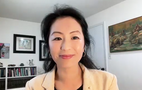
More than twenty years ago, Sister Sun was a young woman who loved to dress well and took great care with her appearance. Today, she most often wears a windbreaker jacket. It suits her life now: windproof, dirt-resistant, easy to wash, and practical for heading out at a moment's notice whenever a call comes.
She has been answering such calls for more than two decades. A phone rings: an elderly person is nearing the end of life, a cancer patient is in unbearable pain, or a family needs an extra pair of helping hands. She picks up her backpack and leaves at once. The bag has long been packed and ready.
Seeing Life's Final Chapter Through the Pharmacy Window
For many years, Sister Sun worked in the pharmacy of a hospital in northern China. Day after day, she checked prescriptions, prepared medications, and dispensed them. Looking up from her work, she watched a steady stream of patients pass by. Reflecting on those years after her retirement, she said, "Every day I watched patients groaning in the hallways. I saw so many elderly people in the final stages of life, overwhelmed by despair and helplessness. Deep inside, a seed was planted for the future."
In 2002, she began caring for several elderly people living alone in her hometown. At the time, she was not yet a Christian. She simply could not bear to look away. She saw the need, and she stepped forward.
There was no training, no handbook, no organizational backing, and no team to support her. What moved her was something very simple: "Whenever I saw those lonely, helpless elderly people lying in bed, unable to move, my heart ached for them. I just couldn't remain indifferent."
In 2004, Sun heard the gospel, was baptized, and became a Christian. Her faith gave her an explanation for the burden she had long felt for those approaching the end of life.
From that point on, she came to understand her care for the elderly as a form of ministry. Yet in practical terms, little changed after 2004. She was still serving on her own, still traveling through her hometown and the surrounding villages, feeling her way forward in a ministry of hospice care.
Sixteen Years of Finding Her Way in the Dark
From 2002 to 2018, even Sun cannot say with certainty how many elderly people she cared for or how many dying patients she walked alongside in their final days.
Her approach was simple. If she heard that someone was seriously ill, she would go. If she saw a family in need, she would lend a hand. Sometimes she helped bathe an elderly person. Sometimes she cooked meals. Sometimes she sat by the bedside and talked. Often, she simply sat and kept them company.
"Back then, I had no knowledge of hospice care and no formal training at all," she recalled.
For sixteen years, there was almost no one else in either the local community or the local church doing this kind of work alongside her. Few who have not witnessed it firsthand can imagine what the room of a patient with advanced cancer can be like: the lingering odor, blood and bodily waste, ulcerated skin, faces contorted in pain, and uncontrollable cries in the middle of the night. Compassion alone is not enough to endure such realities.
Sun said, "Most people simply can't do this work. Anyone who wants to serve in this way must have real spiritual maturity and a clear calling from God. Otherwise, one look is enough to frighten them away."
In 2018, a turning point finally came. Through a recommendation, she attended a comprehensive training program in palliative care, or hospice care. The course provided not only practical knowledge in medicine and caregiving, but also a theological framework for understanding death, the end of life, and caring for people in their final days.
One concept from the training later became widely used among those engaged in hospice care ministry. Known as the "Four Parting Words at Life's End," it encourages people to express gratitude, speak words of love, seek and extend forgiveness, and say their farewells. Yet Sun soon discovered that everyone approaches the end of life differently. No one can simply follow a textbook step by step.
She also came to realize something else: on this journey, she was not alone.
Her Husband Struggled to Understand
Along the path of hospice care ministry, some of Sun's greatest resistance came from her husband, Zhang.
Today, Zhang is a Christian. Under Sun's encouragement and the counsel of their church, he was, as he puts it, "reluctantly baptized." Yet his understanding of the faith remains limited. In his eyes, his wife's conversion itself had already become something of an embarrassment.
Zhang explained that where he grew up, some Christians had a poor reputation. He had seen people who professed faith in Jesus, then abandoned their jobs and families, disappearing without a trace. To him, the situation was even more difficult because Sister Sun not only believed in Christ but also devoted enormous amounts of time, energy, and money to caring for others, especially those nearing death.
At first, the tension surfaced in occasional complaints and periods of cold silence. Their arguments were usually over small, everyday matters. Over time, however, the conflict escalated. Zhang began speaking harshly to her, and even humiliating her in public.
From his perspective, his wife's faith and ministry posed a real threat to their family. The pressure was financial, as portions of their retirement income were used to help others. It was social, as he worried about what people in the village might think. And it was emotional as well.
This situation continued for many years, but Sun continued her ministry despite the pressure she faced from her husband.
The Final Year of Her Father-in-Law's Life
Around 2016, her father-in-law was diagnosed with a serious illness: kidney failure.
He and his wife had more than one son. Zhang was the eldest, and there was a younger brother. According to local tradition, both sons and their wives were expected to share responsibility for caring for aging parents. However, things unfolded quite differently. Sun's mother-in-law was elderly and in poor health herself, making it impossible for her to care for her husband. The younger daughter-in-law, though always gracious in words and attentive when it came to pleasing the elderly couple, chose to step back when the crisis came and decisively distanced herself from the family.
Sun stepped forward and assumed virtually all the caregiving responsibilities. Because of the long-standing tension between her and her husband, neither her father-in-law nor her mother-in-law was particularly fond of her. Yet for nearly an entire year, she remained at her father-in-law's bedside around the clock.
Every two hours, she turned him to prevent bedsores. She bathed him, cleaned him after episodes of incontinence, changed his bedding, checked constantly for dampness, and carefully examined every area vulnerable to prolonged pressure, from his shoulders and lower back to his heels. When he was in pain or became agitated, she comforted him. When he refused food, she patiently encouraged him to eat. After a full year of care, not a single bedsore appeared anywhere on his body.
Sun reflected, "After this, my husband's attitude toward me changed a great deal. After my father-in-law passed away, he really had nothing left to criticize on that front."
Even so, to this day, Zhang still does not fully approve of his wife's faith and ministry.
A Vast Gap at the Bedside
In recent years, Sun has noticed a trend: fewer elderly people die suddenly from illness. Instead, many spend their final months or years gradually approaching the end of life through prolonged bed confinement, loss of physical function, and persistent pain.
According to China's National Health Commission, life expectancy in China reached 79 years in 2024, up from 78.6 years in 2023. By 2025, it had risen further to 79.25 years. Chinese people are living longer than at any other time in the country's history. One direct consequence of this increased longevity is that the period of care needed at the end of life is also becoming longer. From the point at which a person loses the ability to care for himself or herself independently until death, the journey may last a few months or several years.
For many families, the greatest challenge is simply not knowing what to do. An elderly parent becomes bedridden. Adult children must continue working. A spouse may already be elderly and frail. Professional care is expensive. Hospitals cannot provide indefinite care. Yet once the patient returns home, families often find themselves lacking both the help and the knowledge needed to provide proper care.
In some Western countries where palliative and hospice care systems are well established, hospitals, community organizations, and volunteers work together within coordinated support networks. In many grassroots communities across China, however, such networks remain fragmented. Often, end-of-life care depends on the commitment of a small number of individuals and a handful of dedicated teams.
Springtime for a Building Contractor
Sun recalled one case from her years of hospice ministry.
When Sun first visited him, she found that this once-powerful man was completely bedridden. Cancer had spread throughout his bones. The slightest movement brought pain like an electric shock or the cut of a knife. He could no longer move at all. Because he had been confined to bed for so long and his circulation had deteriorated, large areas of skin across his chest and back had become ulcerated and were bleeding. Night after night, he wept and cried out in agony. At times, he even asked his family to obtain medication so that he could end his life prematurely.
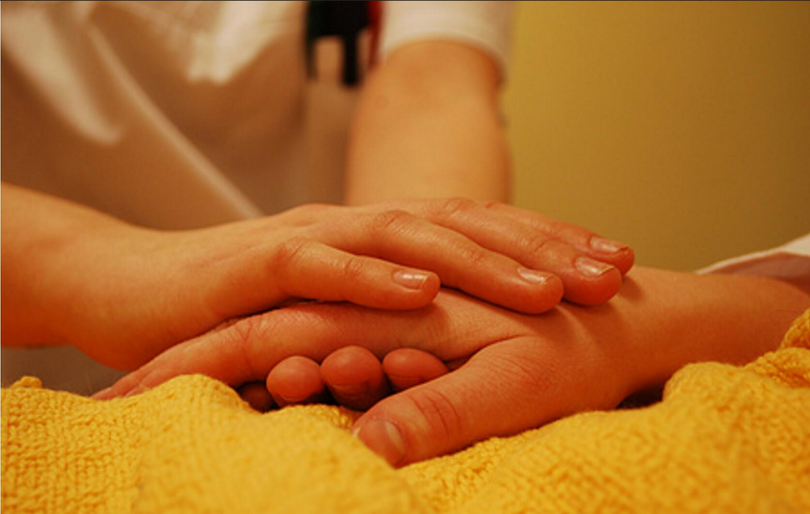
Sun walked over and took his hand. She did not begin with a sermon, nor did she rush to tell him how he ought to face death. Instead, she simply asked what he desired most.
"I want to see spring again," he replied.
The truth was that he did not want to die.
She said to him, "When we look at spring in this world, the trees turn green, but later they wither. The flowers bloom, but later they fade. Spring is indeed beautiful, but it lasts only for a little while.
Then she asked, "Would you like to go there?"
"I would," he replied.
Not long afterward, he departed this world for another. As for where he ultimately went, that is known to God alone.
Twin Girls with ALS and a Bracelet Beyond Price
Among all the people Sun has accompanied over more than twenty years of hospice care ministry, few memories are as heartbreaking as that of a pair of twin girls, barely in their teens, who had been diagnosed with ALS.
The disease first took away the use of their legs. Gradually, it robbed them of the ability to turn over in bed, swallow, speak, and eventually breathe. Doctors told their parents plainly that the girls had only a few years to live. From the onset of the illness, their bodies grew weaker and thinner with each passing day. Their arms lost all strength to support themselves and became extremely vulnerable to fractures.
When Sun entered the family's life, she did what she had done for so many others before. She helped bathe the girls, made their beds, and eased some of the burden that had fallen upon their family. She talked with them and shared her faith in ways they could understand.
She encouraged their family to express their love openly. She also helped the girls experience, while they were still able to respond, that they were not burdens, not unwanted responsibilities, but lives deeply cherished.
Yet even in such circumstances, there was something the disease could not take from them: their love of beautiful things. Their mother bought them bags of colorful plastic beads to make bracelets and other small crafts. The beads were bright and cheerful, inexpensive trinkets that cost only a few yuan a bag. With great effort, the girls made a bracelet for her. She treasures it to this day.
The Strength Behind One Woman's Perseverance
Although Sun received formal hospice care training after 2018, she continues to serve largely on her own to this day. She reveals that her strength comes from her daily practice of kneeling in prayer.
Over the years, Sun has witnessed striking differences among families. According to her, when she serves elderly believers who have walked faithfully with the Lord throughout their lives, their final journey is often marked by a greater sense of peace, and the caregiving process tends to be less emotionally draining. The more difficult cases are often those involving families with no faith, or those who profess faith yet live amid confusion, conflict, and unresolved tensions.
In such situations, hospice care involves far more than addressing a patient's physical and emotional needs. It also requires navigating complicated family relationships, deeply rooted secular views of life and death, and all manner of unexpected resistance and opposition.
"That kind of exhaustion isn't physical," she said. "It is a weariness deep within the spirit, a form of spiritual refining."
There is, however, one memory that continues to encourage her. During one particularly demanding season of ministry, Sun found herself deeply weary. Around that time, a fellow believer who had been serving for many years in southern China returned home. For a season, the two women prayed together almost every day.
One day, the woman said to her, "What you're facing is more than physical illness. You're standing in the midst of a fierce spiritual battle fought in the unseen realm." At last, someone understood. Someone recognized that what she was experiencing was not merely physical exhaustion, but a far deeper spiritual burden.
In her hometown, an obscure village in northern China, such understanding is exceedingly rare.
Over more than two decades of ministry, Sun has given sacrificially in countless ways. Her offering has included not only financial resources, but also immense amounts of time, emotional energy, and spiritual strength. Yet one desire remains close to her heart: that others would join her in this work.
"I'm also trying to equip brothers and sisters in the church," she said. "I pray that the Lord would raise up others who sense His call to this ministry."
(This article is based on field interviews conducted with Sister Sun and others in April 2026. At the request of the interviewees, all names used in this article are pseudonyms.)
- Translated by June C.
Originally from the Evangelical Vision
CCD edited and translated with permission