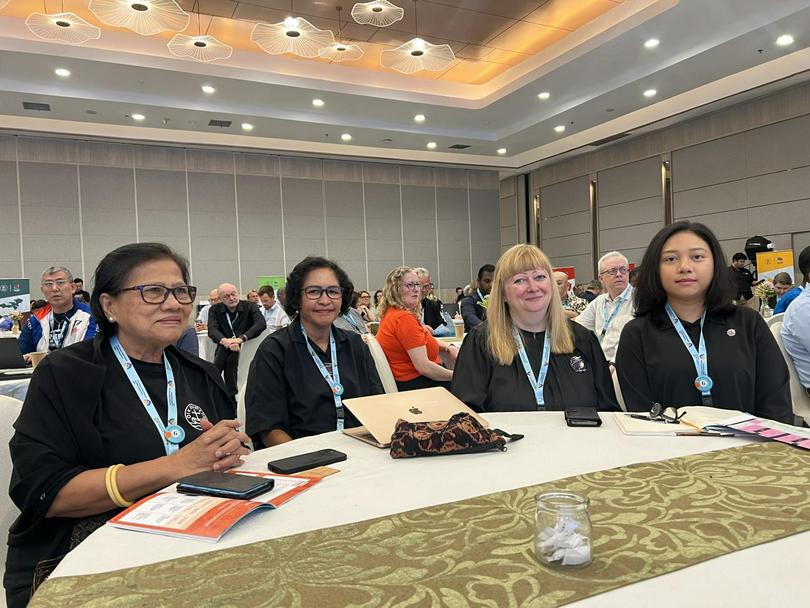
The Patmos Bible Summit opened on 13 May in Jakarta, Indonesia, drawing 250 participants from all over the world.
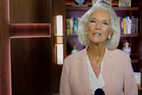
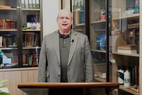
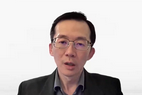
Rev. Dr Henriette Hutabarat-Lebang, (Toraja Church), World Council of Churches (WCC) president from Asia and president of the Indonesian Bible Society, offered an opening reflection. Words of welcome were shard by secretary general of the United Bible Societies Rev. Dirk Gevers; CEO for the British and Foreign Bible Society Paul Williams; and the general secretary of the Indonesian Bible Society, Rev. Dr Sigit Triyono, who is also the incoming chairperson for the United Bible Societies.
In her homily, Hutabarat-Lebang offered the premise that the Bible tells us Christ remains in control of history, and Christ remains at work. "This is a source of hope for us amid various problems and challenges we face even today, as individuals, as families, as churches, and amidst global challenges: be it communal conflicts, wars, poverty, or ecological destruction," she said. "There is a blessing for everyone who faithfully reads God's Word, for everyone who hears it, and for everyone who follow its message."
Hutabarat-Lebang added that many people do not have access to the Bible for a variety of reasons. "One of the important roles of the Bible institutions is to collaborate with the churches and all Christians to invite people to read, meditate on, and apply God's Word in their lives," she said. "The question is how to do it, especially to people with different cultures and different generations."
Hutabarat-Lebang posed the question of how, in the midst of a strong influence of secularism, to engage people, especially youth, to know and understand the message of the Gospel of Jesus Christ that can guide their lives.
"God's Word is able to reveal the condition of those who are faithful to God, but also to those who often forget God's Word, or those who live under pressure and are often overcome by a spirit of fear," she said.
In addition to Hutabarat-Lebang, the WCC delegation present at the Patmos Bible Summit includes Rev. Dr Mery Kolimon, former head of the Protestant Evangelical Church in Timor and a WCC central committee member; and Rev. Karen Erina Puimera (Protestant Church in Western Indonesia), moderator of the commission Young People in the Ecumenical Movement and a youth member of the WCC executive committee and Marianne Ejdersten, WCC director of communication;
The WCC delegation is leading workshops, participating as panelists, and also served on the visionary steering committee for the conference.
About the Patmos World Bible Attitudes Survey
The Patmos survey, in partnership with Gallup, is the largest Bible engagement research project ever. It provides data to establish a new understanding of how people relate to the Bible.
The survey analyzed 150 countries, was produced in 89 languages, and encountered 91,000 people.
The roots of this vision date back 2,000 years to the island of Patmos. It was here, the Bible tells us, that seven short letters were written to churches in seven distinct contexts, revealing a deeper insight into their spiritual condition.
The encouragement and challenges of those insights continue to agitate the imagination of many communities to this day. It is hoped that the missiological and audience insights from the Patmos survey will shape a shared imagination and framework for mission, and that shared framework will enable collaboration and innovation for generations to come, so that the whole world can encounter the Bible.
Originally from the World Council of Churches
CCD edited and reprinted with permission